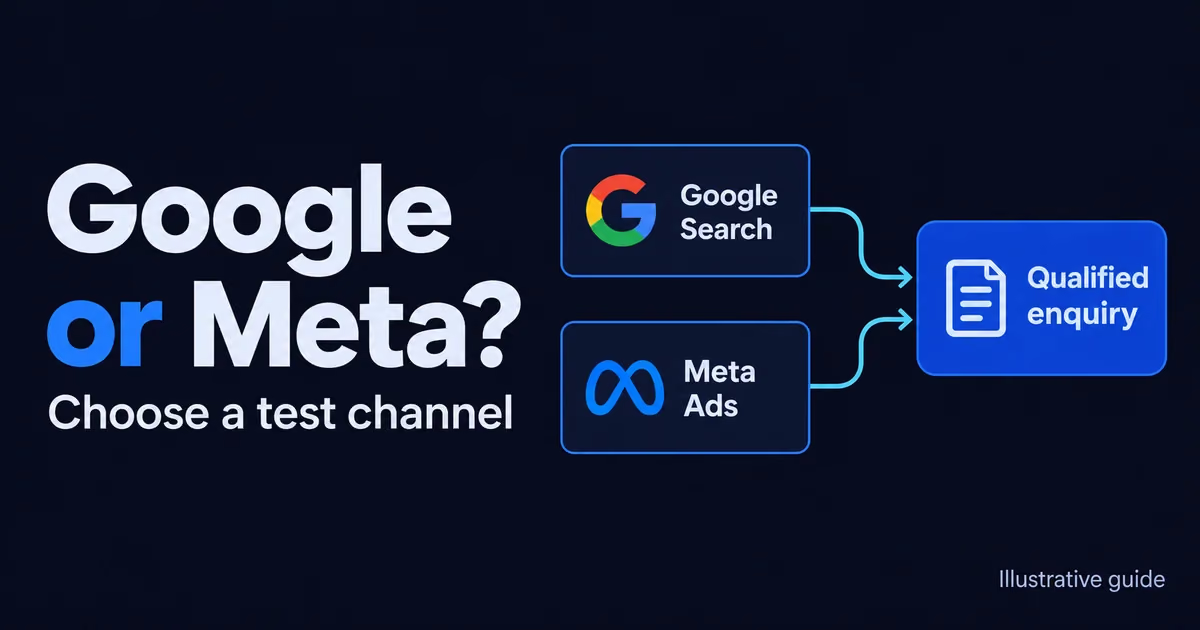
Google Ads vs Meta Ads is a choice about the first customer interaction you want to test. Consider Google Search for a defined need people search for, and Meta when you can demonstrate an offer through visual content. Choose using demand, creative readiness and follow-up capacity, then compare qualified enquiries and understood costs.
This guide helps a Saudi business commission an advertising test. It compares Search with advertising on Facebook and Instagram; Google Ads also contains other campaign types. We checked official sources on 26 October 2026. Time-sensitive platform details apply as of October 2026. The scenarios below are proposed tests, not client results or performance forecasts.
Start with the question a customer has before seeing the advert. A search query can name a service, problem or location. A visual advert needs to give someone a reason to stop and consider the offer. Use that distinction to prepare a first test, then review the enquiries it produces.
As of October 2026, Google’s campaign type guide describes Search campaigns as text adverts in search results, reaching people searching for products and services. It also lists other campaign types. Ask a supplier to name the proposed type: a quotation for a “Google campaign” leaves too much unspecified.
Meta’s official explanation of ad selection, available as of October 2026, describes using engagement on Facebook and Instagram to help determine which adverts people see. That does not establish a sales rate for your business. Ask to see the creative and explain the step you expect its viewer to take.
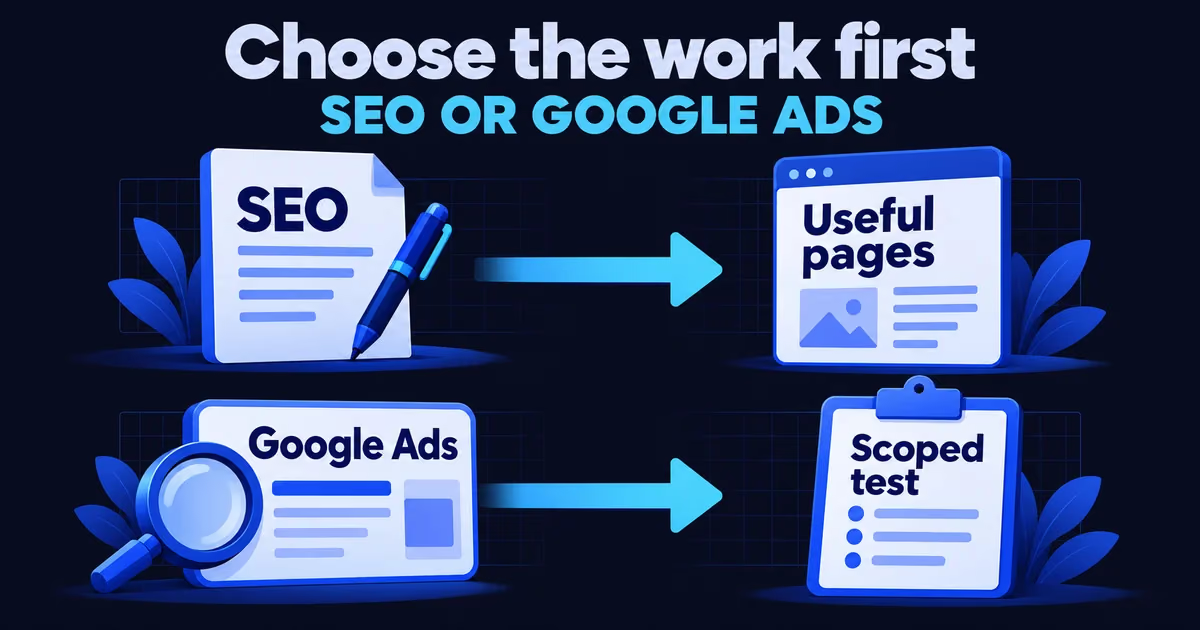
Write a concrete hypothesis: “We want to learn whether this offer brings enquiries from businesses within our service area.” Name the service, location and language. If your unresolved decision is paid traffic versus organic search, use the paid-search and SEO starting-point guide before comparing these advertising channels.
Prefer the channel whose test you can prepare properly. For Search, prepare service-related keywords and a page that answers the query. For Meta, prepare visual material that explains the offer and an understandable next step. Use this table to compare the work each proposal includes.
| Buying question | Google Search test | Meta test |
|---|---|---|
| What are we testing? | Queries related to one defined service | A message or offer for a proposed audience |
| What must we prepare? | Keywords and a relevant destination | Images or video, copy and a destination |
| What does the buyer inspect? | Relevance of queries to the service | Clarity of creative and enquiry fit |
| Where does the customer go? | The agreed service or enquiry page | The agreed page or contact route |
| How do we judge it? | Enquiries reviewed by sales staff | Enquiries reviewed against the same criteria |
Consider a hypothetical equipment-maintenance company serving one city. It could request a Search test for the equipment it accepts. A shop explaining an unfamiliar product could request a visual Meta test. Neither example establishes a universal winner; each gives the supplier a specific question to investigate.
If a supplier proposes both channels, request a separate purpose for each. Ask whether the second tests a message or an additional source of enquiries. Avoid an automatic budget split without a reason, especially when one employee must prepare content, follow up with customers and review the reporting.
Read the Arabic offer on a phone and ask a colleague to explain what the customer receives. Check the service area, exclusions and next step. Prepare the English journey separately if you serve English-speaking customers. Keep the underlying offer consistent while allowing each version to use natural wording.
Use language from enquiries your team is authorised to review. A literal translation of an English keyword list is a starting hypothesis, not evidence of Arabic search behaviour. Once you choose Search, the guide to language, keywords and campaign budgets covers the implementation questions to take into your supplier discussion.
Submit an unmistakable test enquiry from a narrow screen. Use a long Arabic name and a test contact value; check both error handling and successful delivery to the responsible employee. If WhatsApp forms part of the journey, distinguish a link click from a conversation reaching your staff.
Give that employee the offer and a proposed first qualification question. Agree who follows up during handovers and when a request remains unresolved. The advert, page and reply should describe the same next step. Record these checks before spending, so a broken contact route does not obscure your channel comparison.
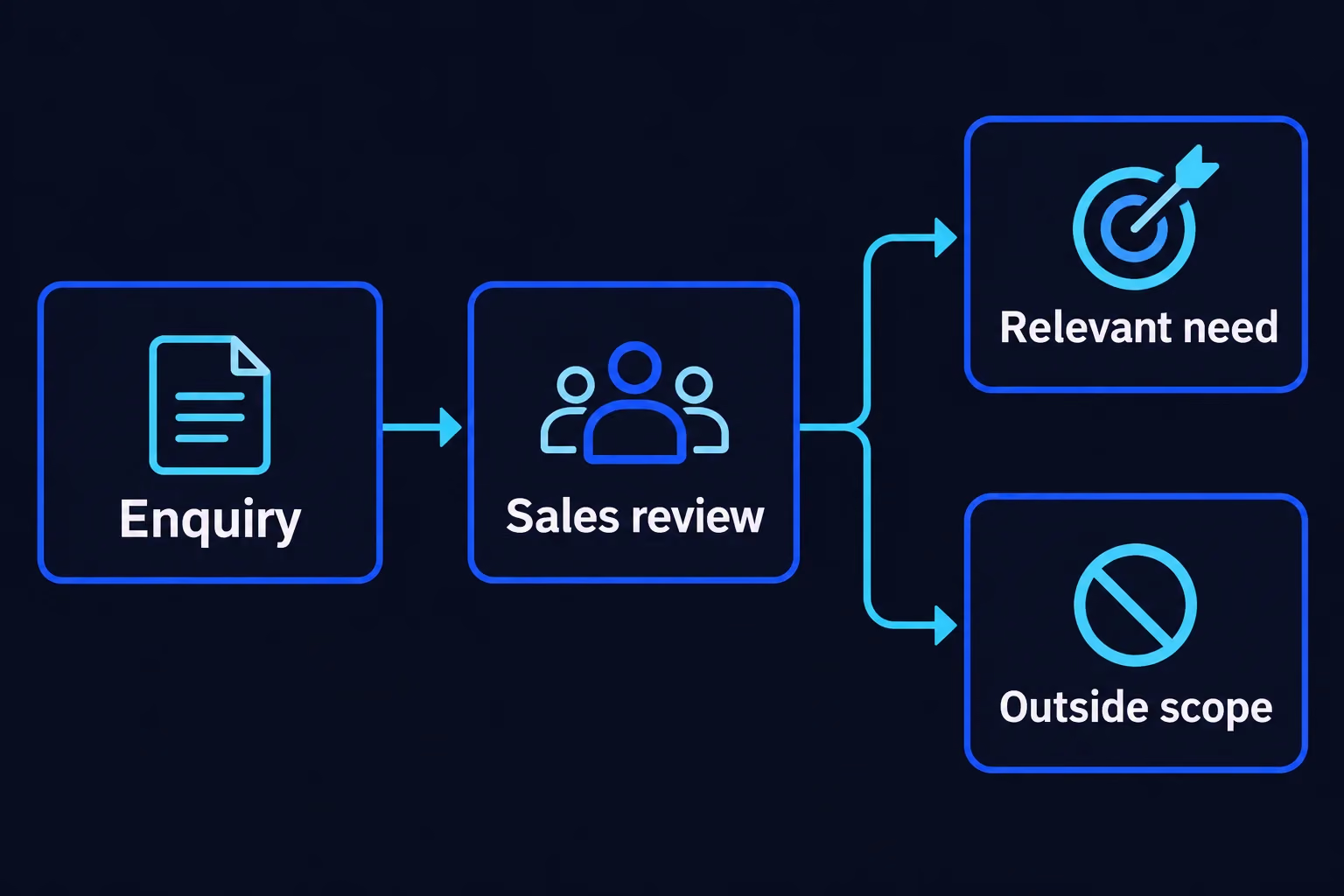
A proposed qualification process: sales staff review the need before classifying an enquiry. This is an illustrative workflow, not campaign performance.
Agree a written definition with sales staff. A proposed starting point is a contactable person with a need inside your service area and scope, who accepts an appropriate next step. Adapt it to your business and apply it consistently. Record rejection reasons so the supplier can investigate mismatched messages or targeting.
Use clear statuses: new, under review, suitable, outside scope and the eventual follow-up outcome. An unanswered request remains unresolved. Store the latest contact date and responsible person, so a reviewer can distinguish marketing results from work that your staff still need to complete.
Calculate cost per qualified enquiry by dividing channel spend for an agreed period by the qualified enquiries attributed to it under your chosen method. If there are none, report that directly; do not display a zero acquisition cost. Show a separate calculation when including management and production costs.
Inspect a sample with the supplier using your approved access arrangements. Does the copy attract job applicants, or imply a wider service area than you cover? Record each proposed change and its reason. Keep enquiry qualification, accepted work and collected payment as distinct stages rather than calling them all “conversions”.
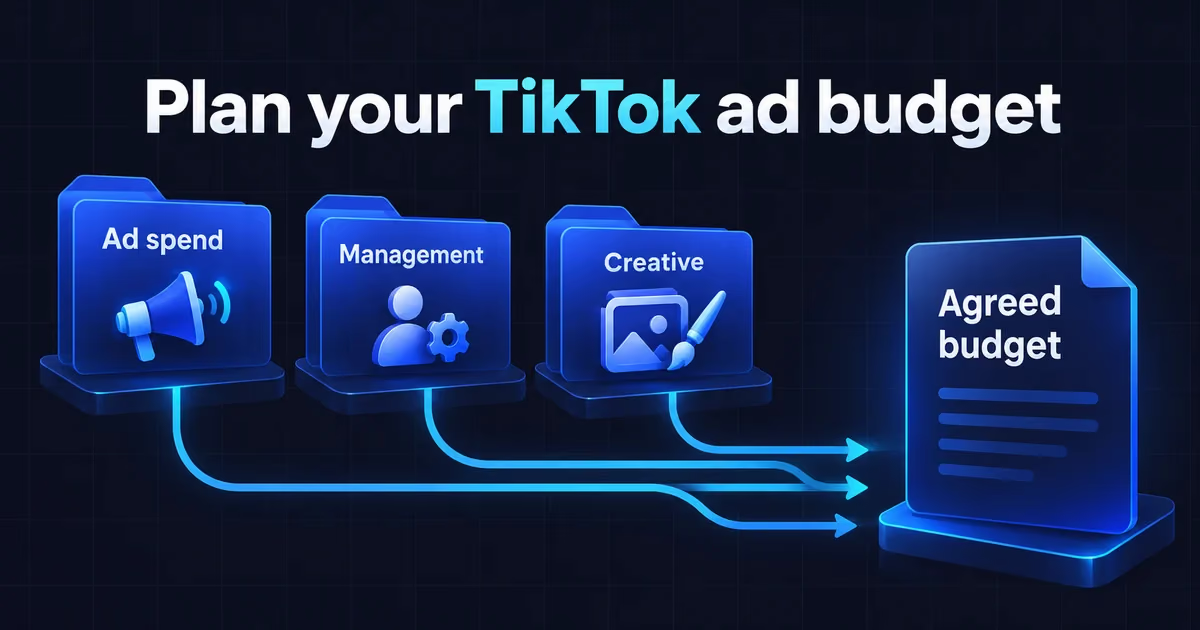
Request quotations for the same work, with separate lines for media spend, management, creative and tracking. Specify the material, languages, approval process and file ownership. List landing-page work separately. Mark an unknown cost as awaiting a quotation instead of filling the gap with an assumed market price.
Ask how the budget setting behaves. As of October 2026, Google’s spending-limit documentation says that, for most campaigns, the daily limit can reach twice the average daily budget and the usual monthly limit is 30.4 times that average. Campaign type and budget changes matter; confirm the settings proposed for your account.
There is no Saudi cost-per-click benchmark, promised return or fixed channel split in this guide. Ask for dated inputs relevant to your own keywords, audience and location. If a supplier estimates enquiry volume, request the calculation and assumptions, with a clear distinction between a planning estimate and guaranteed delivery.
Agree who may change spend, approve creative or stop the test. Keep the core accounts under your business’s control with appropriate supplier access. Ask what happens to files, reporting and unfinished work when the engagement ends. A comparison should show what each party delivers and what the business pays for it.
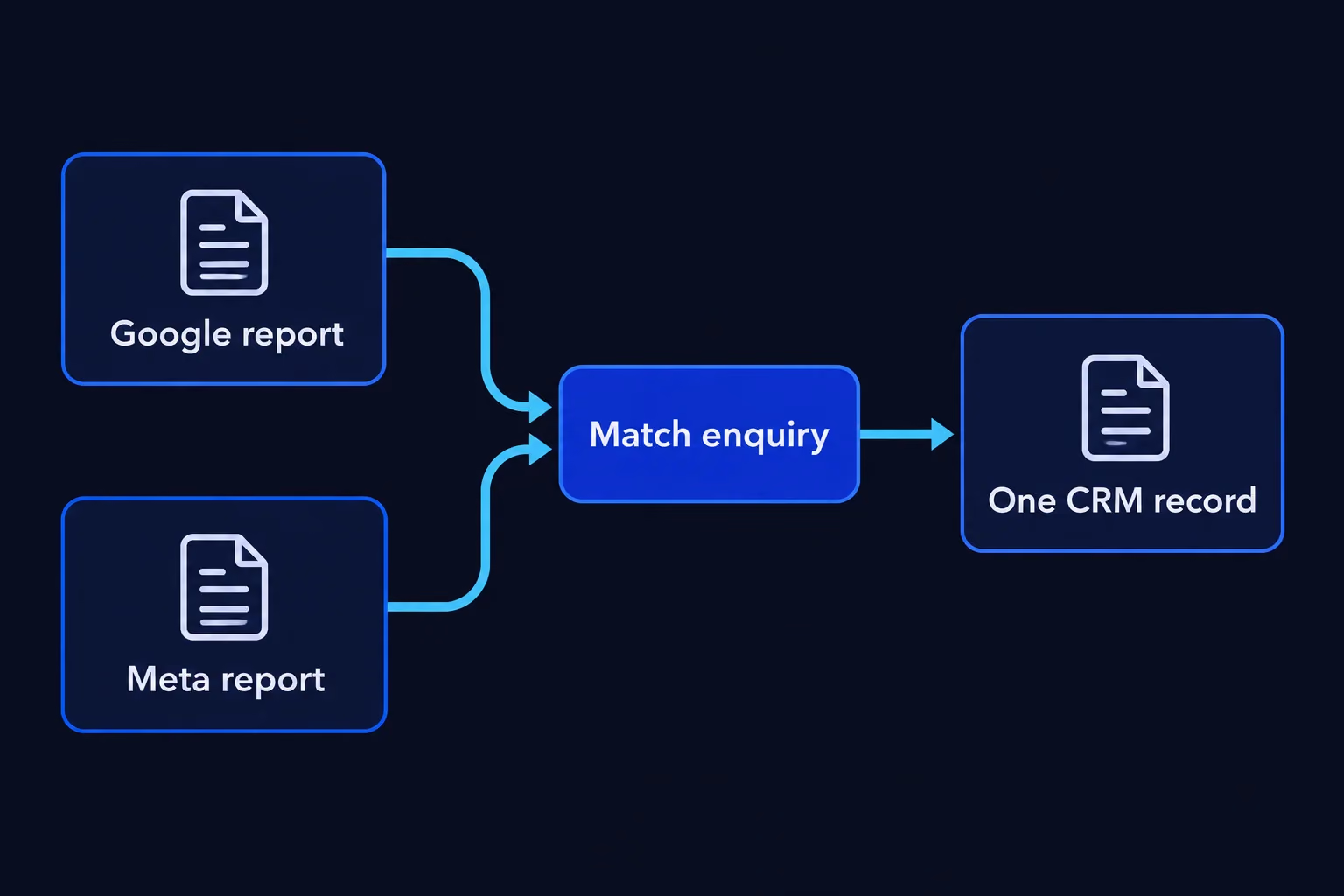
An illustrative matching process keeps the same enquiry from becoming two business records when both channel reports contain it.
Maintain one business record for each enquiry alongside the channel reports. In a hypothetical journey, someone sees an Instagram advert, later searches for your name and submits a form. If several reports claim the enquiry, reconcile it using an appropriate internal identifier before adding outcomes together.
Write down the reporting period, conversion definition and source-assignment rule for each report. Ask which figures mean a form submission, a conversation or a purchase. Keep an unmatched record in an unresolved group; assigning it to a channel just to complete a chart would conceal the uncertainty.
Use the source-to-enquiry reconciliation guide to prepare fields and ownership. At review meetings, show suitable enquiries and rejection reasons beside spend. Preserve the original reports and reconciliation notes, allowing another employee to repeat the calculation and understand differences without relying on the supplier’s presentation.
Write a short plan before launch and name the person who can continue, change or stop it. Choose a review period suited to your sales cycle and follow-up capacity. Also identify faults requiring immediate action, such as a broken form or requests arriving in an unattended account.
- Select one service and an area you can serve.
- Write the channel hypothesis, message and evidence you need.
- Test tracking and delivery of a sample enquiry to staff.
- Approve the spending ceiling, change permissions and content owner.
- Review accepted and rejected enquiries at an agreed time.
- Record the decision and next change while preserving previous evidence.
Fix a page problem before judging its traffic source. Revise an inaccurate service description before increasing reach. If the evidence remains insufficient, record an inconclusive result. The landing-page checks before buying more visits help when customers ask for information the destination should already provide.
Avoid changing the audience, message and destination together and attributing the outcome to just one change. Keep a dated change log. The next reviewer should understand what the team tested and which questions remain open, including orders or enquiries that need more time to reach an outcome.
Send the page URL, service area, languages, available creative and qualification definition. Include a short record of previous outcomes if you have one. Ask the supplier to name the channel, campaign type, reason and unresolved assumptions. A colleague should be able to understand the proposed work without attending the sales call.
The practical takeaway is to choose a test your team can operate, then inspect enquiries after sales review. When discussing paid digital marketing management with TecnoStack, bring the requirements for that test. Prepare your page, business objective and qualification criteria, then book a consultation to scope your advertising test.