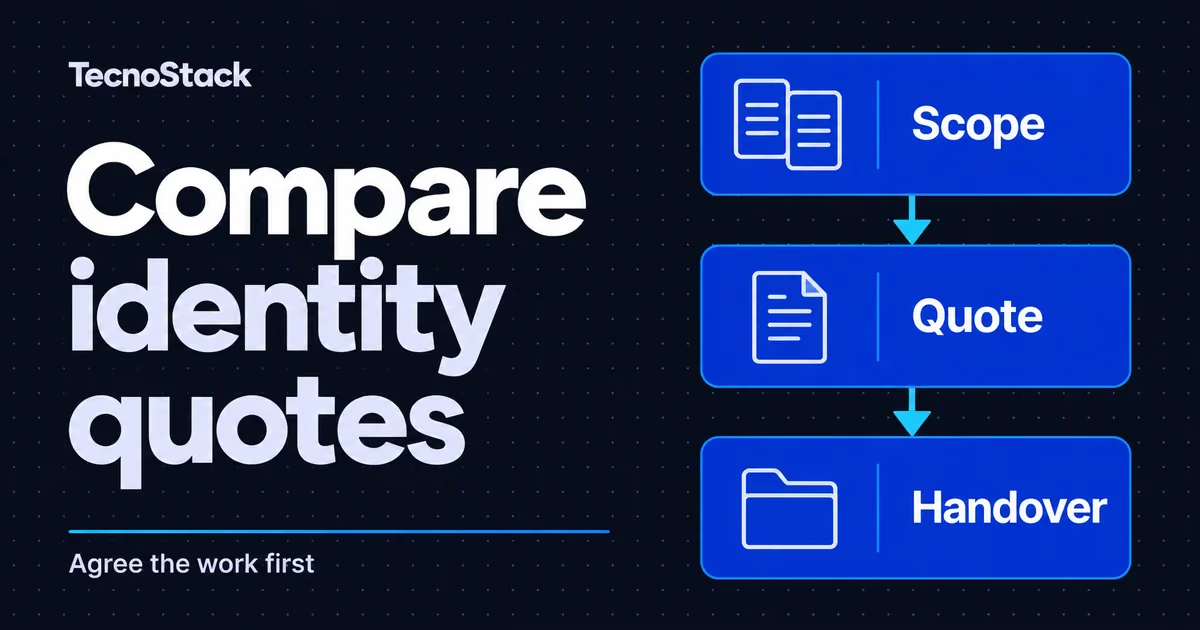
Brand identity cost in Saudi Arabia depends on the work you commission: refining existing assets or creating a new identity, the language arrangements, creative directions and applications. As of October 2026, TecnoStack quotes this service after a scope review and publishes no fixed starting price. Compare proposals against one shared brief, with design fees, licences and rollout work identified separately.
Start with the task your team needs to perform after handover. A sales team may need an editable bilingual proposal. A new business may need a name arrangement and rules for its website. A rebrand may involve replacing existing materials across several channels. Write down those uses before asking suppliers to price them, so their answers describe comparable work.
List the decisions the designer must develop and the files your team expects to receive. A project that retains a suitable logo and clarifies its use has a different brief from one that explores a new visual direction. Our guide to separating a logo brief from identity and production work helps you define that starting point.
For brand identity cost, TecnoStack reviews the assets, languages and intended applications before quoting. The proposal sets the logo variants, creative directions, review rounds and applications. A package name such as “complete identity” still needs an itemised description that your team can check at delivery.
Tell the supplier which decisions remain open. If the business name or approved copy is missing, identify who will provide it and when. Name the person who consolidates feedback. Ask the supplier to show dependencies in the schedule, so you can assess the proposed process alongside the fee.
Use one row per deliverable or decision, with an “unspecified” entry wherever a proposal leaves something unclear. Send the same table and assets to each supplier. The example below is a request for information, rather than a TecnoStack package or a schedule of market prices.
| Comparison item | What you provide | What the supplier should specify |
|---|---|---|
| Existing identity | Available files and elements to retain | Review and refinement scope |
| Languages | Approved Arabic and English names | Logo arrangements and language versions |
| Creative directions | Audience, purpose and suitable references | Number of directions and selection process |
| Revisions | Decision owner and feedback process | Review rounds and their boundaries |
| Applications | Named templates and required sizes | Editable deliverables and formats |
| Guidelines | Tasks your team will repeat | Usage rules and examples included |
| Handover | Editing tools and intended users | Source files, exports and access requirements |
| Other costs | Possible licences, printing and publishing | Inclusions, exclusions and responsible owners |
Give the brief a date and version. If you add a presentation template after the first supplier responds, send the revised brief to everyone before comparing their final proposals. Keep the answers with the brief so you can refer to the agreed requirements at acceptance.
Describe how you will check important files. For example: “The sales owner can open the Arabic and English proposal templates, change the service description and export the agreed format.” This gives both parties a concrete handover task without making assumptions about which software or file formats they will use.
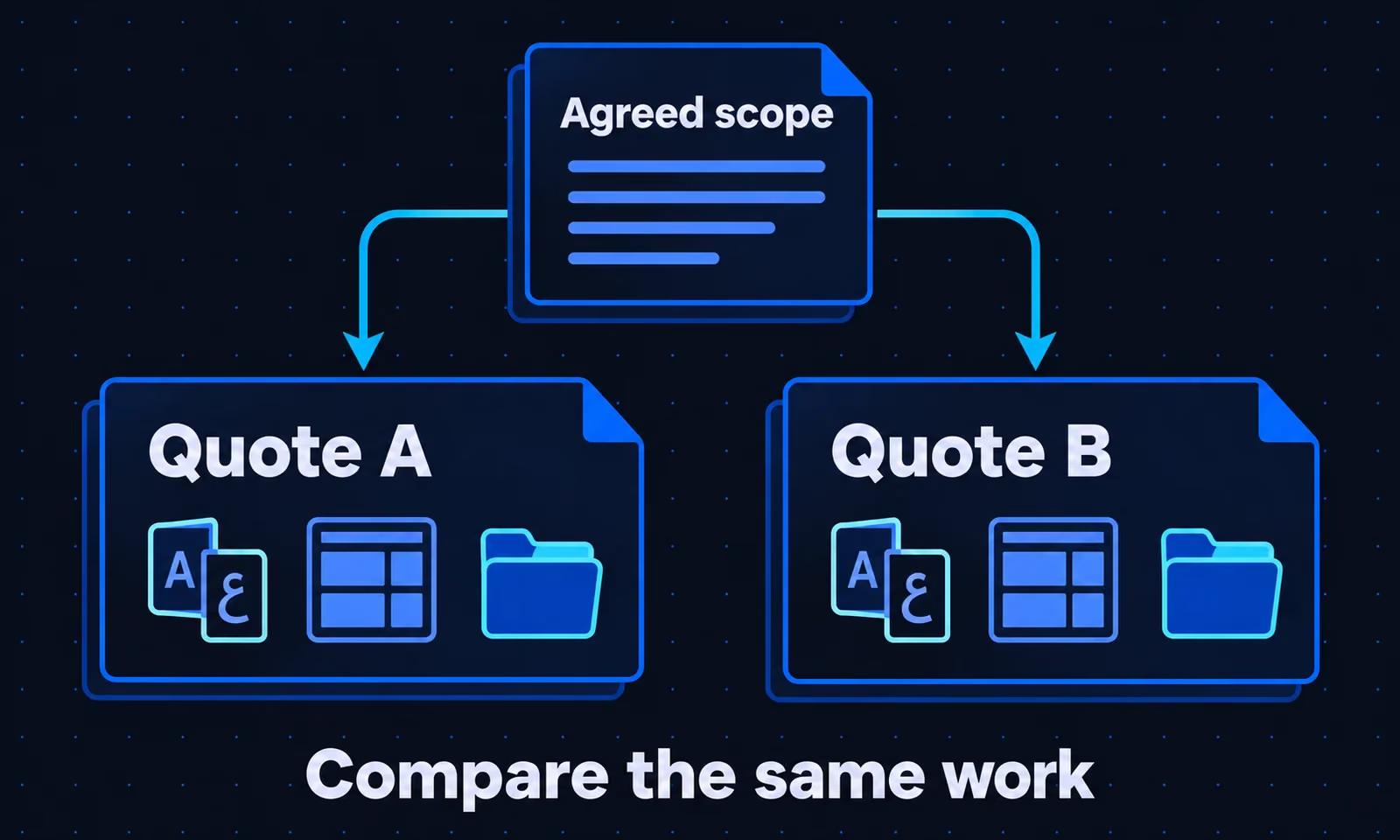
Illustrative comparison: send the same scope to both suppliers before comparing their quotes. Neither proposal is shown as a winner.
Name the language arrangements required in each application. “Bilingual identity” could mean a combined Arabic and English logo, separate arrangements, or both. A proposal template might use separate files or a layout containing both languages. Agree the intended use before counting exports.
Supply realistic text for review: a long service heading, a person's name, a phone number and a short description. Ask to see them at the size your team will use. Review the content-heavy page as well as the cover. Identify who approves language and who checks the printed version if print is in scope.
Use the Arabic and English identity acceptance questions when preparing those examples. For the quote itself, record the required versions, approved wording, named applications and language reviewers. Ask the supplier to identify any writing or translation work separately, so both parties understand who will supply the final text.
Ask for an explicit list of included and separately scoped work. TecnoStack's current identity service treats naming, trademark work, paid asset licences, printing, photography, website development and ongoing content production as separate unless the proposal includes them. Some projects will not need all of those items; do not turn a possible dependency into an assumed charge.
Distinguish designing a reusable template from producing the materials that use it. You might commission a social layout that your team fills each month, or also request a named set of finished graphics. Record both deliverables if you need both, with the source files and future production owner specified.
Check the chosen font provider's terms. As of October 2026, Adobe Fonts' licensing guidance distinguishes receiving graphics or correctly embedded documents from editing the design and accessing its fonts: the latter requires the client's own licence. Record the font source and who needs direct access.
For each potential external expense, identify who requests it, approves it and pays for it. Mark an outstanding printer's estimate as pending instead of inserting an unsupported amount. Our published packages and scope-based pricing overview also distinguishes services with starting prices from services that require a proposal after review.
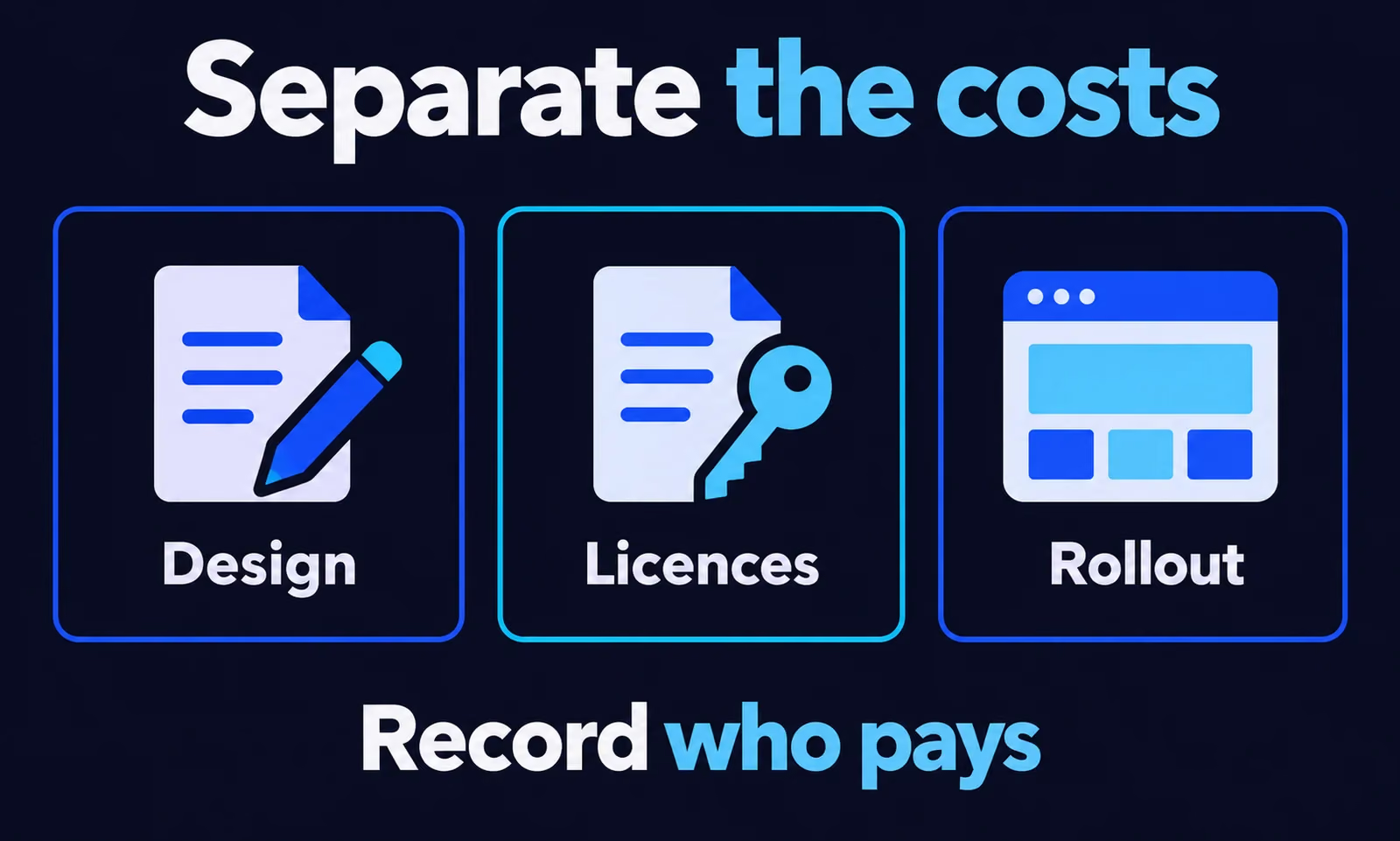
Record design fees, any necessary licences and rollout responsibilities separately. These are possible cost categories, not quoted amounts or automatic charges.
Ask suppliers to align the scope before choosing on price. Consider a hypothetical team commissioning a bilingual identity and sales-proposal template. One supplier lists a finished presentation file; another lists an editable template. Ask whether the sales colleague can change the content later using the tools available to them.
Send the same clarification to both suppliers: “We need an editable sales-proposal template, the agreed language versions, and the fonts or instructions needed to obtain them.” Request an updated deliverable list and price if that changes the work. Keep the amended responses with the brief rather than relying on a verbal explanation.
You can also separate launch requirements from later applications. If exhibition materials are not needed at launch, list them as deferred work. Ask which identity decisions they depend on and whether further design development would be required. Choose a first phase that your team can use, and record its limits so the later work has a clear starting point.
Define a review round, the feedback owner and the point at which a request becomes a new direction. Discuss a concrete example: adjusting the name size within an approved direction differs in scope from returning to explore another concept. Ask the supplier how they handle each case before work begins.
Have one person consolidate comments from management, marketing and sales. Connect each comment to an intended use, such as a name that is difficult to read at the required size or a missing agreed layout. Resolve conflicting preferences within your team before sending the designer instructions.
When someone adds an application, ask for its effect on the fee, delivery date and file list before approving the change. Keep a short record of the request, its reason, the decision owner and the amended scope. This helps both parties know which version of the brief they are working against.
Ask a future user of the identity to complete a normal task with the delivered files. They should open the template, edit real content and export the required output, then check both language versions. Record anything missing against the agreed deliverable list. The brand-guide and template handover checklist provides a practical starting point.
Check filenames, source access, the guide version and the location of approved assets. Ask the supplier to distinguish working files from material ready to publish. Test the handover on the workstation and editing tool your colleague will use, including the recorded font and image dependencies.
Assign an owner to each channel that needs updating. Accepting design files does not tell you whether someone has updated the website or sales presentation. Use the website and campaign rebrand rollout plan to list those jobs, then agree which ones the supplier will carry out and which belong to your team.
Keep acceptance evidence concise: the file tested, the task performed, any outstanding issue and the person who reviewed it. Ask for corrections to missing agreed deliverables before closing the project. If your team requests a new application during that review, record it as a proposed change so the original handover remains assessable.
Prepare one brief with the business objective, existing assets, approved names, required languages and applications. Add your editing tools, decision owner and target date with its reason. Request itemised deliverables, review boundaries and exclusions from each supplier, and resolve missing answers before comparing fees.
Share the brief and available files through a consultation to scope your identity proposal. We can then agree what the work needs to deliver before quoting.